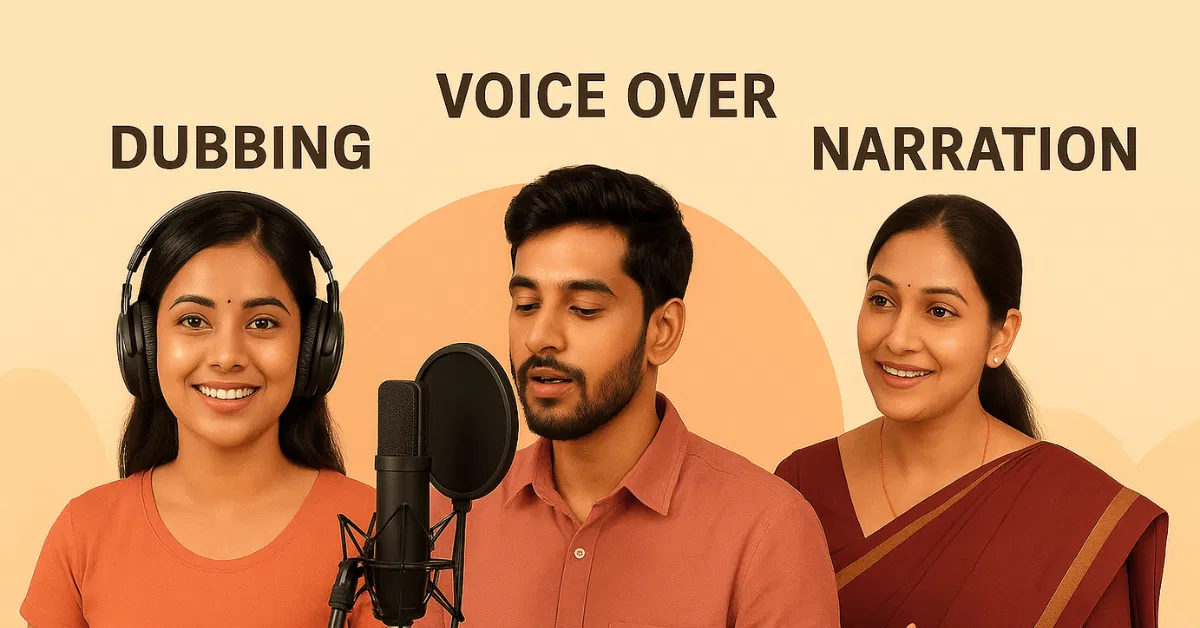
What is the Difference Between Dubbing vs Voice-Over vs Narration?
When you watch a movie in your own language, listen to an audiobook, or hear a voice guiding you through a documentary, you’re experiencing Dubbing vs Voice-Over vs Narration. A lot of people mix up these terms, but each has its own purpose, process, and effect on the audience. Knowing the difference will help you choose the right one for your project, whether it’s a film, commercial, e-learning course, or storytelling video. This blog will explain everything that you want to know about Dubbing vs Voice Over vs Narration.
1. What is Dubbing?
Dubbing means replacing the original dialogue in a video or film with a new language, while making it look like the actors are speaking it naturally.
How it works: The script is translated into the target language. The words are adjusted to match the actor’s lip movements.
Voice actors record the new lines with the same tone and emotion. In the audio background, music and sound are added. We see dubbings in foreign movies, TV shows, documentaries, Animated movies and video games.
2. What is Voice Over?
In the voice-over, a new audio is added over a video without affecting it or changing it. It doesn’t have to match the character’s lips.
How it works:
A script is created or translated. Then a voice artist records it in a studio. They had the audio over the video. You see it in documentaries, TV and radio commercials, E-learning and Corporate Videos, etc.
Example: A travel documentary where you hear a narrator talking in your language while the original speaker’s voice is faint in the background.
3. What is Narration?
Narration is a type of voice-over used mainly for storytelling or describing events. The narrator guides the audience through the story, often being the main voice you hear.
How it works:
A narrator follows a written script. The focus is on pacing, tone, and emotional connection. It’s less about matching visuals and more about telling the story well. You see it mostly in audiobooks, nature and history documentaries, short films and storytelling videos.
Example: In Planet Earth, Sir David Attenborough’s voice describing wildlife scenes—that’s narration.
4. Key Differences in Simple Words
Let’s understand the difference again in simple words.
Dubbing – Changes the original voice to another language and matches lip movements.
Voice Over – Adds a voice track on top of the video without lip syncing.
Narration – A form of voice-over focused on storytelling or explaining scenes.
Dubbing is common in movies and TV shows. Voice-over is popular for ads, training, and corporate content. Narration is used in documentaries, audiobooks, and tours.
5. Pros and Cons of Each
Dubbing
✅ Feels natural for the audience
✅ Good for full immersion
❌ More expensive and time-consuming
Voice Over
✅ Quick and affordable
✅ Works for many types of content
❌ Less emotional impact than dubbing for dramas
Narration
✅ Great for storytelling and emotional connection
✅ Perfect for content without much dialogue
6. When Should You Use Each?
Go for dubbing if you’re translating films, shows, or games for a new audience. Choose voice over for training videos, ads, corporate explainers, and e-learning. Pick narration for documentaries, audiobooks, or storytelling projects.
Final Thoughts
Dubbing, voice over, and narration may sound similar, but they’re used in very different ways. Dubbing replaces dialogue in a new language with perfect lip sync. Voice-over adds an extra voice to explain or guide. Narration tells a story and connects emotionally with the audience. Understanding the difference means you can choose the right style for your content and get the best results.
At Voice Country, we offer all three, backed by a team of skilled artists in many languages. Whether you want lip-sync-accurate dubbing, clear and professional voice-overs, or powerful narration, we can help bring your project to life.